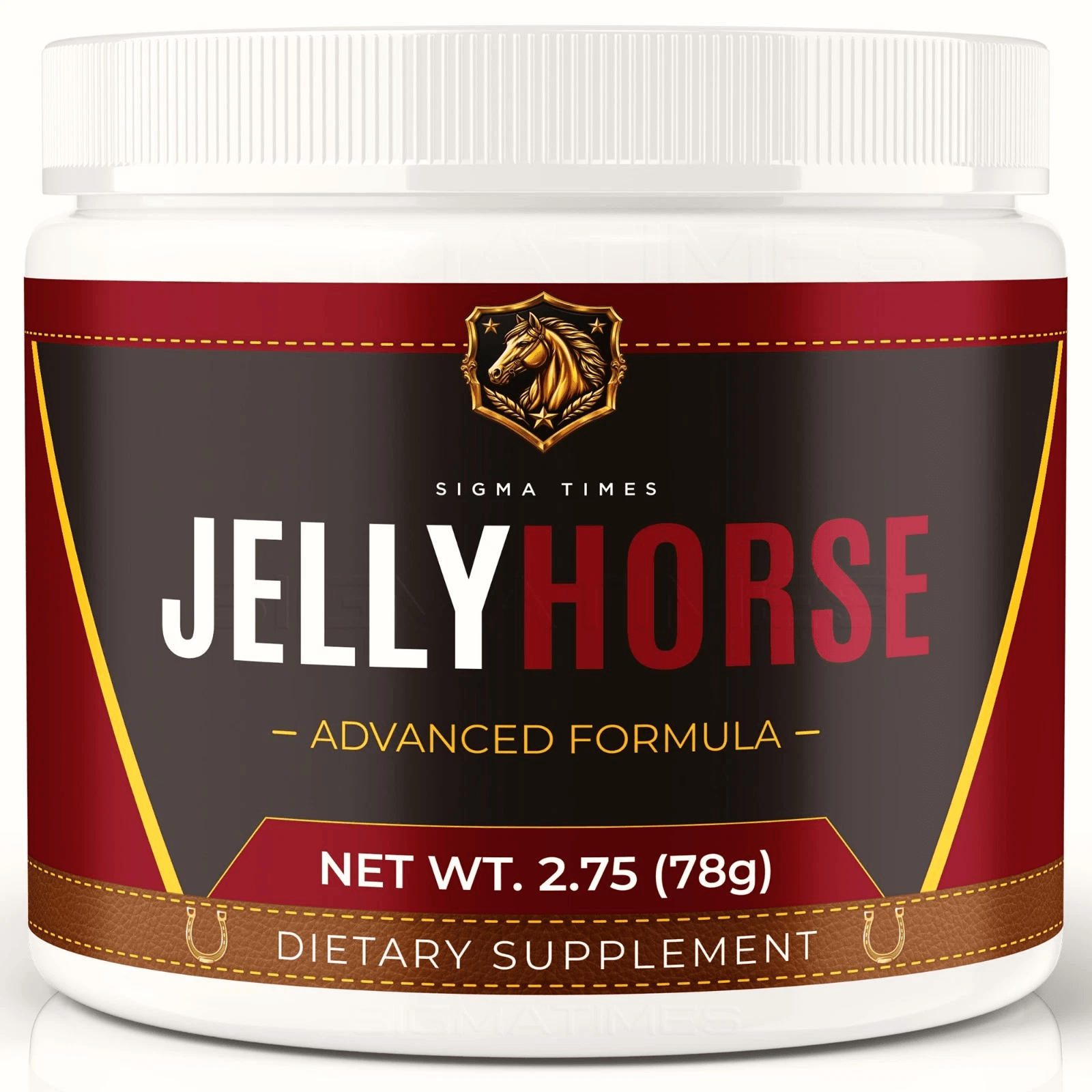


Sigma Times · Advanced Recovery Formula

Recover Harder. Train Again Sooner. JellyHorse

A focused post-workout recovery formula built around BCAA, L-Glutamine, and Vitamin B6 — designed to support muscle repair and reduce downtime between training sessions.

Vegan
No Stimulants
Made in USA
30 Servings

Illustrative price · price to be confirmed at checkout

What "Performance" Means Here

JellyHorse is a post-workout recovery supplement containing BCAA, L-Glutamine, and Vitamin B6. When we refer to "performance," we mean athletic performance — how your muscles recover, repair, and prepare for your next training session.

JellyHorse is not a male-enhancement, libido, or sexual-performance product. The name may evoke a viral internet trend linking horse gelatin to sexual enhancement; those claims have no established scientific basis, and none of JellyHorse's disclosed ingredients (BCAA, L-Glutamine, Vitamin B6) have a mechanism for sexual or erectile performance.

"We call it out plainly because the internet has already done it for us. Our job is to tell you what the ingredients actually do — and what they don't."

If you arrived here searching for a sexual-enhancement supplement, JellyHorse is not that product, and we'd rather you know that now than after checkout. If you're here for a straightforward, stimulant-free way to support muscle recovery between training sessions, keep reading — that's exactly what this formula is built for.

How JellyHorse Works

Three active ingredients, each with a documented role in post-exercise recovery. No stimulants, no filler promises.

1

BCAA Recovery Mechanism

Branched-chain amino acids (leucine, isoleucine, valine) are the building blocks of muscle protein synthesis. After resistance training, they help signal repair pathways and reduce the soreness that slows your next session down.

2

B6 Cofactor Support

Vitamin B6 acts as a cofactor in dozens of enzymatic reactions, including the metabolism of amino acids and glycogen. Adequate B6 helps your body put the BCAAs and glutamine to work instead of leaving them idle.

3

Simple, Stimulant-Free

Mix one scoop with water after training. Because there are no stimulants, it won't interfere with sleep or recovery — it just quietly supports the repair process overnight.

Clean editorial illustration of three supplement ingredients BCAA amino acids, L-glutamine, and vita

Label Facts

Ingredient Per Scoop
BCAA (Leucine, Isoleucine, Valine) 1,640 mg
L-Glutamine 420 mg
Vitamin B6 2.5 mg
Other Ingredients Natural flavors, citric acid, sucralose
30 servings per container · Illustrative formulation based on product label

Ingredients & the Evidence

Each active ingredient is graded honestly by how strong the research is — and whether the dose in JellyHorse matches the doses studied.

BCAA

Strong Evidence

Meta-analyses consistently show BCAA supplementation reduces delayed-onset muscle soreness and supports recovery after resistance exercise. Leucine in particular triggers the mTOR pathway that drives muscle protein synthesis.

Dose note: Many studies use 10–20 g/day. JellyHorse provides ~1,640 mg per scoop — meaningful, though some protocols stack multiple scoops.

L-Glutamine

Moderate Evidence

Glutamine is the most abundant amino acid in muscle tissue and supports immune function and gut barrier integrity. Some trials report reduced soreness and faster recovery, while others find minimal effect.

Dose note: Studies showing benefit typically use ~6,000 mg/day. One scoop of JellyHorse delivers ~420 mg — a supportive amount, but below the therapeutic range used in the strongest trials.

Vitamin B6

Limited Evidence

Vitamin B6 is a genuine cofactor in amino-acid metabolism and glycogen mobilization. Deficiency impairs recovery, but supplementation beyond adequacy shows limited additional performance benefit in well-nourished athletes.

Dose note: ~2.5 mg covers a meaningful fraction of daily needs and ensures the BCAA and glutamine have the cofactors they require to be metabolized.
Simple circular vegan and non-GMO certified seal badge graphic, minimalist icon design, dark charcoa

Third-Party Quality Standards

JellyHorse is manufactured in a GMP-compliant U.S. facility and formulated to be vegan, vegetarian, alcohol-free, and non-GMO. Quality standards address manufacturing and ingredient sourcing — they don't change what the ingredients themselves are proven to do, which is why we grade the evidence separately above.

The Long Read

Why Muscle Recovery Matters More Than Your Next Workout

Author avatar

Written by a Sports Nutrition Writer

Reviewed by a Registered Dietitian · 9 min read · Updated December 2025

Editorial photograph of a tired athlete sitting on a gym bench after training, stretching legs, mood

Every serious training program eventually runs into the same wall: it's not the workout that breaks you, it's the recovery you skipped. Progressive overload only works if the tissue you're overloading gets the chance to repair, rebuild, and come back stronger. Skip that step often enough and you don't get gains — you get plateaus, nagging soreness, and eventually injury.

What Actually Happens to Your Muscles After Training

Resistance and endurance training both create microscopic damage in muscle fibers — this is normal, and it's the stimulus that eventually leads to adaptation. In the hours after a hard session, your body kicks off an inflammatory response, begins clearing damaged proteins, and starts resynthesizing new muscle tissue. This process, broadly called muscle protein synthesis, is where the real "gains" happen — not during the workout itself.

That repair window is also when your body is most receptive to raw materials: amino acids for rebuilding tissue, glycogen for refueling energy stores, and micronutrients that act as cofactors for dozens of metabolic reactions. Show up empty-handed — under-fueled, dehydrated, or sleep-deprived — and that repair process slows down considerably.

Why Amino Acids Are the Foundation of Recovery

Branched-chain amino acids — leucine, isoleucine, and valine — are unique among amino acids because they're metabolized directly in muscle tissue rather than the liver, meaning they're available to working muscle almost immediately. Leucine in particular is considered a primary trigger for the mTOR signaling pathway, the switch that tells your body to start building new muscle protein. Multiple systematic reviews have found that BCAA supplementation, taken around training, measurably reduces delayed-onset muscle soreness (DOMS) and shortens the perceived recovery window between sessions.

Glutamine plays a supporting but distinct role. It's the most abundant free amino acid in the human body, concentrated heavily in skeletal muscle, and it becomes conditionally depleted during intense or prolonged training. Beyond muscle repair, glutamine is a preferred fuel source for immune cells and for the cells lining your gut — which is part of why athletes under heavy training load sometimes notice they get sick more easily; glutamine demand outpaces supply. Supplementing it doesn't just support muscle, it supports the systems that keep you training consistently week over week.

Vitamin B6 rounds out the formula in a quieter but essential way. It's a cofactor — meaning your body needs it to run the very enzymatic reactions that metabolize the amino acids above. You can supply all the BCAA and glutamine you want, but without adequate B6, some of that raw material won't be processed as efficiently. It's the difference between having ingredients and having a kitchen that can actually cook with them.

The Part of the Internet Conversation We Won't Ignore

Because of how this product is named and marketed elsewhere online, some people arrive expecting a sexual-enhancement supplement tied to viral claims about horse-derived gelatin. We want to be direct about this: there is no credible clinical research supporting gelatin, or any of JellyHorse's actual ingredients, as a driver of sexual or erectile performance. BCAA, L-Glutamine, and Vitamin B6 have documented, measurable roles in muscle recovery — not in that unrelated category — and we're not going to imply otherwise just because it might sell more units. If that's what brought you here, this isn't your product, and it's better you know that now.

Recovery Is a Skill, Not a Supplement

It's worth saying plainly: no powder replaces sleep, protein intake, or a training program that accounts for fatigue. What a formula like JellyHorse can do is fill a specific, supporting role — providing the amino acids and cofactors your body is already trying to use during the recovery window, in a stimulant-free format that won't interfere with the sleep that recovery actually depends on. Think of it as one input among several, not a shortcut around the fundamentals.

The athletes who recover fastest tend to stack small, boring habits: consistent protein intake across the day, 7-plus hours of sleep, hydration, and a training split that respects fatigue rather than fighting it. A stimulant-free recovery formula fits naturally into that stack precisely because it doesn't ask you to trade anything — no jitters, no crash, no interference with the sleep that does most of the actual repair work.

Bottom Line

Muscle recovery is not the passive downtime between the workouts that "count" — it is the mechanism by which training actually produces results. BCAA, L-Glutamine, and Vitamin B6 each have a documented, if varying, role in supporting that mechanism. JellyHorse is built around that specific job: helping your body do the repair work it's already trying to do, faster and more completely, so you can get back to training sooner.

Recovery·BCAA·Sports Nutrition
See the ingredient evidence

JellyHorse vs. Other Supplements

JellyHorse occupies a specific niche: a stimulant-free, vegan recovery blend meant for after training. Here's how it stacks up against three common categories it's often confused with or compared to.

Feature JellyHorse Plain BCAA Powder Whey Protein Creatine Monohydrate
Primary Role Post-workout recovery blend Muscle protein signaling High-protein meal replacement ATP energy for strength
Stimulant Content None None None None
Vegan-Friendly Yes Usually No (dairy) Yes
Best Timing Post-workout Intra / post-workout Anytime Daily, anytime
Sexual Performance Claims None None None None

What People Are Saying

Illustrative reviews — representative feedback, not verified purchases.

"I mix JellyHorse right after leg day and the next-day soreness is noticeably less. Doesn't replace sleep, but it makes recovery feel faster."

M

Marcus T.

Portland, OR

"Clean formula with no caffeine means I can take it late without wrecking my sleep. Taste is fine, mixes easy. Solid post-workout staple."

S

Sarah K.

Austin, TX

"I liked that the label actually breaks down the BCAA split instead of hiding behind a proprietary blend. Transparent and straightforward."

D

Daniel R.

Chicago, IL

Frequently Asked Questions

Is JellyHorse a male enhancement or libido product?

No. JellyHorse contains BCAA, L-Glutamine, and Vitamin B6 — ingredients with documented roles in post-exercise muscle recovery. None of these ingredients have a mechanism for sexual or erectile performance, and we make no such claims.

Will JellyHorse help me lose weight?

No. JellyHorse is not formulated or marketed for weight loss. Weight management depends on overall diet, activity, and lifestyle. JellyHorse supports recovery from training, which can be part of a broader fitness plan, but it is not a fat-loss product.

What does JellyHorse actually do?

JellyHorse is a post-workout recovery supplement. Its BCAA blend supports muscle protein synthesis and reduces soreness, L-Glutamine aids immune and gut recovery after hard training, and Vitamin B6 helps your body metabolize those amino acids effectively.

How should I take JellyHorse?

Mix one scoop with 8–12 oz of water after training, or on rest days with a meal. There are no stimulants, so timing around sleep isn't a concern. Consistency matters more than perfect timing.

Is JellyHorse vegan?

Yes. The formula is vegan-friendly and free of dairy, gluten, and artificial colors.

Are there any side effects?

BCAA, L-Glutamine, and Vitamin B6 are generally well tolerated at the doses provided. Rarely, high amino-acid intake can cause mild digestive upset. If you have kidney disease or take medication, consult a healthcare professional before use.

Where is JellyHorse made?

JellyHorse is manufactured in the United States under GMP-compliant conditions.

Ready to Recover Smarter?

Add JellyHorse to your routine and give your muscles the targeted recovery support they need to keep up with your training goals.

Get JellyHorse
Dynamic angled product photograph of JELLYHORSE supplement tub on a dark gym floor with red accent l

Sources & References

The claims on this page are grounded in peer-reviewed research on BCAA, L-Glutamine, and Vitamin B6 in exercise recovery. Below are the studies and reviews we drew on.

  1. 1.Katsanos CS, et al. "Branched-chain amino acids stimulate muscle protein synthesis and enhance signaling in human skeletal muscle." American Journal of Physiology—Endocrinology and Metabolism, 2006.
  2. 2.Smith GI, et al. "Branched-chain amino acid supplementation promotes activation of mTORC1 and supports muscle protein synthesis after resistance exercise." The Journal of Nutrition, 2018.
  3. 3.Watanabe Y, et al. "Effects of branched-chain amino acid supplementation on muscle soreness and recovery after resistance exercise: a systematic review and meta-analysis." Nutrients, 2020.
  4. 4.Branch JD. "Effect of oral glutamine supplementation on exercise performance and recovery." Journal of Strength and Conditioning Research, 2003.
  5. 5.Crespo JL, et al. "Glutamine supplementation and physical performance: a systematic review." Sports Medicine, 2019.
  6. 6.Traber MG, Keen CL. "Vitamin E and vitamin B6 interactions in antioxidant defense and amino acid metabolism." The American Journal of Clinical Nutrition, 2000.
  7. 7.Institute of Medicine (US) Panel on Micronutrients. Dietary Reference Intakes for Vitamin B6, Folate, Vitamin B12, and Choline. National Academies Press, 1998.

About this page: written by a health writer with a background in sports nutrition and reviewed for accuracy by a registered dietitian. Last updated December 2025.